For years, the simplest way to use one of the most privacy-conscious mobile operating systems was to buy a phone from Google.
That is not a joke. GrapheneOS was created to offer a version of Android with greater resistance to attacks, fewer services enabled by default and more granular control over applications. It does not include Google apps, although users who need them can install them without granting special privileges. Yet as of August 24, 2026, the only officially supported smartphones are Pixels.
The paradox is only apparent. GrapheneOS does not choose a device based on the logo printed on its case. It chooses according to what the manufacturer permits users to do with the bootloader, the processor's protections, the isolation of cryptographic keys, the speed of patches and the length of support for firmware and drivers.
For a long time, Pixels were the only phones to meet all those requirements at once.
What Was Actually Announced
Here is the news in one place. On March 2, 2026, Motorola and the GrapheneOS Foundation announced a long-term collaboration to design devices compatible with the operating system. According to updates published by the project in August, the first models are expected in 2027, will use high-end Snapdragon platforms and will cost more than comparable Pixels. The stated objective is seven years of updates and access to device-specific firmware, drivers and code early enough to keep pace with new Android releases. Razr foldables and less expensive models may follow, but only if their hardware and support meet the same requirements.
There is no phone to review yet. Motorola has not disclosed a name, price, cameras or final configuration, and no one has announced that the first devices will ship with GrapheneOS preinstalled. The solid commitment is official support for installing an alternative operating system without losing the security chain. The schedule and market position come from project updates and may change before launch.
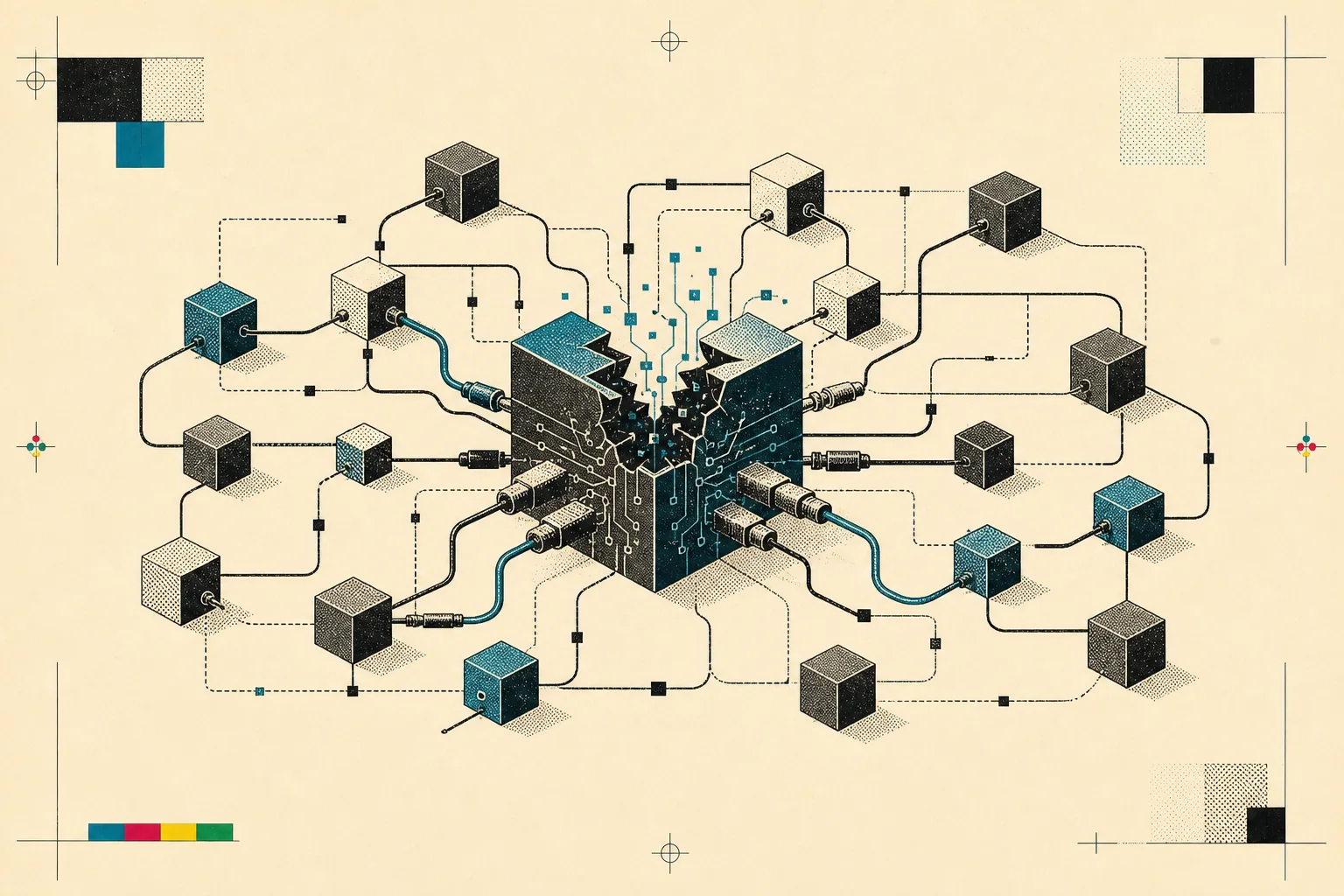
The partnership exposes a truth that privacy marketing prefers to avoid. Privacy is not an app installed on top of just any device. It is a property of the entire supply chain, from silicon to the final update.
An Operating System Does Not Float Above the Phone
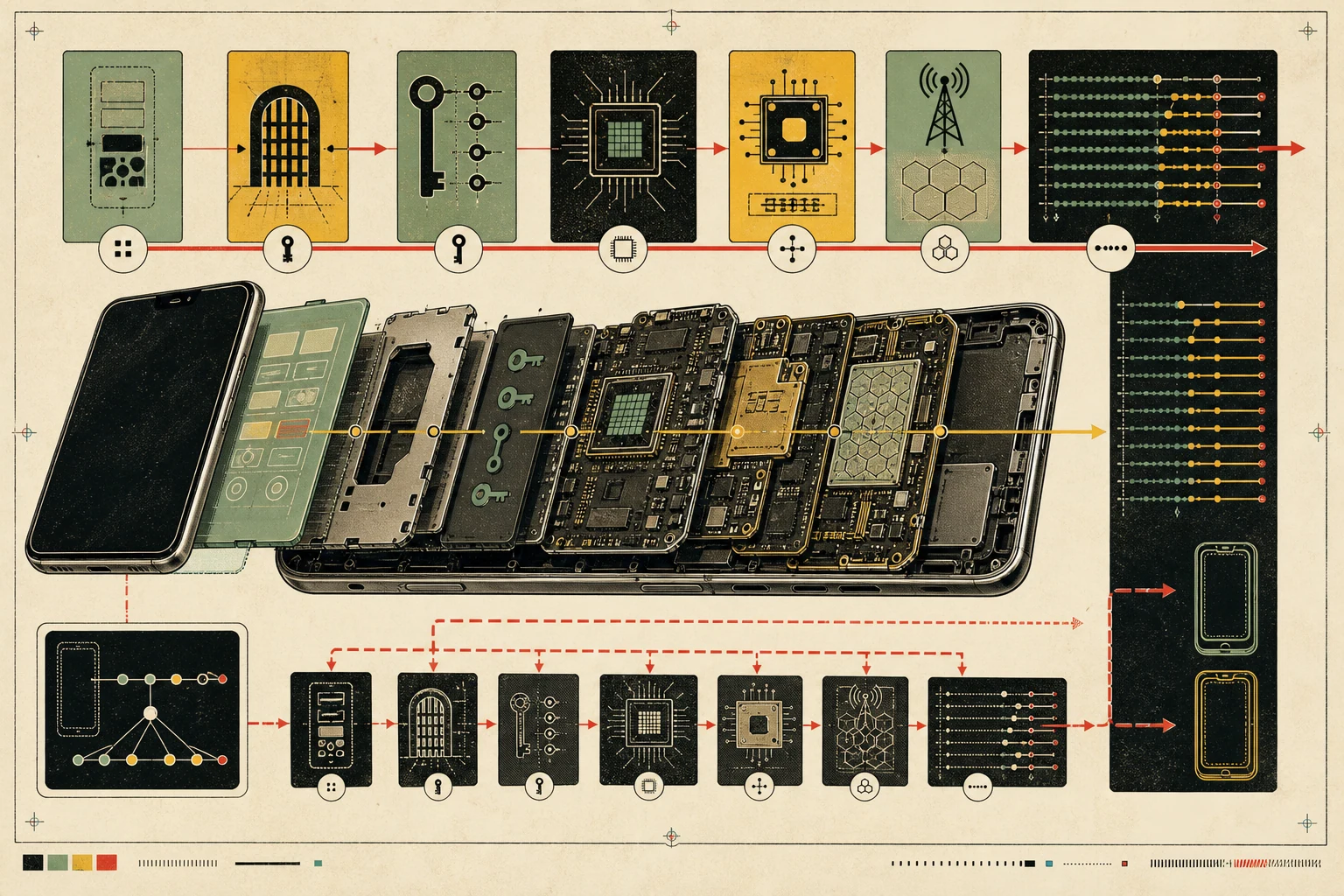
Android looks like a single object because we encounter it through a screen, a launcher and a collection of apps. Beneath that surface are components made and updated by different parties.
There is the Android Open Source Project, the open base developed mainly by Google with manufacturers and communities. There is the Linux kernel, adapted to the hardware. There are drivers and Hardware Abstraction Layers that let the system use the camera, modem, GPU, sensors and memory. There is firmware running on separate components, often proprietary. There is the bootloader that decides which system may start. Finally, there are the services and applications added by the manufacturer to the product it sells.
GrapheneOS can deeply modify some of these layers. It hardens the operating system, reduces attack surfaces, improves sandboxes and permissions, changes defaults, develops its own components and contributes fixes upstream.
It cannot write the modem firmware from scratch, replace every proprietary driver or add a circuit that the processor does not contain. If the manufacturer stops distributing patches for device-specific code, an alternative project cannot promise complete security simply by updating the visible part of Android.
That is why compatibility alone is not enough.
Many custom ROMs can boot on a large number of phones. This shows that the software can operate the device, not that the device retains its intended security properties. A door also works without a lock. That does not mean it protects a house.
GrapheneOS explicitly rejects support at the widest possible scale. On many phones, the hardware and firmware would prevent the project from providing a reasonable level of security regardless of how much work it invested in the operating system. The position can look elitist, but it makes visible a cost that other projects often obscure: maintaining a device means following its specific code, testing it with every release and receiving manufacturer fixes that no outside community can invent.
Unlocking the Bootloader So It Can Be Locked Again
The freedom to install an alternative operating system begins with an operation that sounds dangerous: unlocking the bootloader.
The bootloader is the first program to take control when the phone turns on. It starts the operating system and checks that the loaded software is authorized. A device that does not allow unlocking prevents its owner from replacing the OS. A device that can be unlocked but cannot be relocked with an alternative system offers freedom to modify at the cost of a crucial protection.
A correct GrapheneOS installation on Pixel uses both steps. The bootloader is unlocked, an image signed by the project is installed, and the bootloader is then relocked. From that point on, the phone again cryptographically verifies what it starts, but it trusts the GrapheneOS key rather than being limited to the original system's key.
This is a more sophisticated kind of openness than merely saying "I can change anything." The owner can decide who signs the system and, once the decision has been made, restore the chain of verification.
With the bootloader left open, an attacker who gains physical access can modify parts of the system with fewer obstacles. The phone no longer has the same mechanism for distinguishing the operating system chosen by its owner from one that has been altered. GrapheneOS therefore considers an installation incomplete and unsupported if it does not end with relocking.
The requirement for future devices is precise: they must support alternative operating systems while preserving every hardware security feature. It is not enough to tolerate modding as a laboratory activity. A different system must be allowed to become a first-class citizen.
This distinction also changes the question of ownership. Do we truly own a phone if we can install the software we prefer? Partly. Mature digital ownership also requires the ability to exercise that choice without turning the device into a permanently exposed machine.
The Phone That Checks Itself
Android Verified Boot builds a chain of trust. A hardware-protected root verifies the bootloader; the bootloader verifies the partitions containing the kernel, operating system and manufacturer-specific code; data are checked before or during use. If an element does not match the expected signature, the device can refuse to start it or report an abnormal state.
Verification does not establish that a program is morally good or free of vulnerabilities. It establishes that this is the authorized program and that it has not been secretly modified.
That difference is fundamental. Without authenticity, a legitimate update and an altered package may look identical. Without integrity, an attacker who obtains temporary access can try to leave a permanent change in the system.
The chain also includes rollback protection. Imagine that a new release fixes a flaw. An attacker gains initial access and installs an older, still vulnerable version. If the phone accepts the downgrade, the patch loses its value. Rollback protection records the minimum authorized version in tamper-resistant memory and prevents earlier components from starting.
GrapheneOS requires verified boot and rollback protection for both the operating system and firmware. This detail helps explain why the project cannot run securely on arbitrary hardware. Security does not depend only on the signature of the main OS: the modem, secure environment, boot mode and other components must move forward along the same path.
There must also be a way to report the device's state to the user and, in some cases, to a service that needs to verify it. Hardware attestation can show which key authorized the system, whether the bootloader is locked and which version is running. Like any identification function, it must be designed carefully so it does not become another tracking mechanism. Its security role is nevertheless concrete: it makes the promise "this phone is still running the system you chose" verifiable.
Memory Errors Need Silicon
Many of the most serious vulnerabilities begin with memory-management errors. A program reads past the boundary of an area, uses an object after freeing it or treats attacker-controlled data as trusted. Turning these bugs into exploits is difficult, but phones execute billions of instructions and process images, messages, web pages and radio signals from the outside world. There is no shortage of attack surface.
ARM Memory Tagging Extension, or MTE, adds information to memory areas and to the pointers that use them. When the processor performs an access, it compares the tags. If they do not match, it can detect that the program is touching memory outside its boundary or after it has been released.
It is another barrier: it makes certain classes of error more visible during development and harder to exploit in production. The selected mode matters. Android distinguishes synchronous checks, which stop the process immediately, from asynchronous checks, which cost less but are less precise. GrapheneOS uses the available hardware to extend the protection beyond the selective deployment in base AOSP.
The decisive word is hardware. The operating system can decide how to use MTE, but it cannot add the feature to a CPU that lacks it. Pixel phones from the eighth generation use compatible ARMv9 cores, and GrapheneOS enables the protection for the operating system and applications known to be compatible, with controls for problematic cases.
The project's published requirements also include pointer authentication, branch target identification and other defenses that restrict the ways an attacker can redirect execution. There is no need to memorize the collection of acronyms. The point is that a secure OS does not fight exploits with its own code alone. It orchestrates functions that the processor must provide.
A Small Computer Inside the Computer
A phone contains secrets that should not be available even to the main operating system: cryptographic keys, credentials, material used to encrypt data and counters that slow attempts to guess the unlock code.
Android Keystore allows applications and the system to create keys whose private material is not extracted into the normal execution environment. Operations are delegated to a Trusted Execution Environment or, on devices with StrongBox, to a dedicated secure element with its own processor, memory and random-number generator.
The goal is to contain damage. If a large, complex part of Android is compromised, the attacker does not automatically obtain the secrets held by the isolated component. They may try to request operations, but they still have to satisfy checks tied to authentication, device state and the key's authorization rules.
GrapheneOS requires StrongBox, key attestation, hardware-bound password derivation and resistance to malicious secure-element updates. These functions cannot be imitated with the same strength by an app or by a partition added after purchase.
Isolation of other components matters too. Cellular modem, Wi-Fi, Bluetooth, GPU, camera and storage controller all process complex data and often run their own firmware. Good architecture limits the memory regions they can reach and treats exchanged information as untrusted. Being on a separate chip is not enough if that chip can read everything.
Mobile privacy is often represented by a location toggle. Before that switch lies an architecture that determines whether components actually respect the boundaries drawn by software.
Four Systems, Four Trade-Offs
The most useful way to read these requirements is alongside the alternatives. The table does not rank which system is "more private" in the abstract. It compares verifiable technical properties as of August 24, 2026. Stock Android is represented by a recent Pixel because phones sold under the same label have widely different policies.
| Axis | GrapheneOS on Pixel | CalyxOS | Stock Android on Pixel | iOS |
|---|---|---|---|---|
| Verified boot | Bootloader can be relocked to the GrapheneOS key on supported devices | Uses Verified Boot and aims for relocking; straightforward on Pixels, device-specific on other models | Locked to Google's signature; the device permits unlocking to install another OS | Apple-signed boot chain; alternative operating systems are not supported |
| Memory hardening | MTE enabled for the system and compatible apps on Pixel 8 and later | Inherits AOSP and hardware defenses; does not claim the same extended use as GrapheneOS | AOSP uses MTE for selected components and lets apps opt in; it is not enabled everywhere by default | Memory Integrity Enforcement with EMTE is always on for primary attack surfaces on models with A19 and later |
| Hardware keys | StrongBox and a secure element are project requirements | Hardware-backed Keystore and StrongBox depend on the supported device | StrongBox and Titan M on compatible Pixels | Secure Enclave, using an architecture different from StrongBox |
| Complete patch lifetime | Depends on the OEM; seven years for Pixel 8 and later | Published estimates by device; proprietary patches still depend on the manufacturer | Seven years of operating-system and security updates for Pixel 8 and later | Apple controls hardware and software; support remains model-dependent, without a directly equivalent uniform commitment in the cited documentation |
The difference with CalyxOS is not that one project "believes" in security and the other does not. CalyxOS supports Pixel, Fairphone, Motorola and SHIFTphone, publishes an end-of-support estimate for each model and tries to preserve Verified Boot, but gives greater weight to global availability, device cost and everyday compatibility. microG is optional during setup and, in the default mode, preserves Google push notifications without requiring an account. It is a harm-reduction strategy: it reaches more people while accepting that some guarantees depend on the individual phone.
/e/OS moves the center of gravity further toward accessibility and continued use. It is available for more than two hundred models, integrates microG and Murena services, and tries to give a second life even to devices abandoned by their manufacturers. The cost of that breadth is heterogeneity: the bootloader can be relocked only on certain official models, and proprietary firmware patches stop when manufacturer support ends even if the community can continue updating AOSP.
GrapheneOS chooses the opposite extreme: few devices, very high minimum requirements and no promise of complete security when the supply chain cannot meet them. Calling this elitist describes its social effect, but not its technical reasoning. The table reveals the actual trade-off: reach, compatibility, installation freedom and depth of hardening do not automatically increase together.
Seven Years Is Not Decoration on the Box
A smartphone can continue to turn on long after it has become insecure.
The battery charges, apps open and the photographs still look good. Meanwhile, the manufacturer stops updating modem firmware, GPU drivers, the kernel or device-specific libraries. The alternative operating system can fix its own code, but not every part that depends on the OEM and chip vendor.
GrapheneOS explicitly ties support length to that of the device. When the OEM no longer provides complete patches, the project may distribute extended-support releases for a period as harm reduction, but warns that these are not complete security updates.
Pixel 8 and later devices have a minimum guarantee of seven years of updates from launch. For future Motorola phones, GrapheneOS is asking for complete monthly patches for firmware, drivers and HALs without routine delays longer than a week, device-specific code updated for new AOSP versions, and a comparable multi-year commitment.
This is one of the least visible parts of the partnership. Motorola is not merely opening a door through which the system can be installed. It must prepare drivers and firmware in a form the project can use, work with Qualcomm on problems and provide material early enough for new versions to ship without months of delay.
According to the project, the goal is to have releases ready alongside major Android versions and to host the necessary AOSP repositories directly. This is supply-chain work, not a certification attached to a finished product.
Update lifetime is also an environmental and ownership issue. A phone without patches is replaced not because it is physically broken, but because its maintenance chain has been interrupted. Making an alternative system supportable for seven years means allowing the owner to use the hardware longer without accepting known vulnerabilities.
Google Play Can Become a Guest
Calling GrapheneOS "Android without Google" captures one possibility, not the whole project.
The operating system includes no Google apps or services by default. It uses its own infrastructure for several basic functions and leaves the choice to the user. Anyone who needs applications that depend on Google Play can install the Play Store, Play Services and related components as ordinary applications inside Android's sandbox.
On the systems shipped by many manufacturers, Google Play Services receives special integrations and privileges. On GrapheneOS, it gets no shortcut around the application model. It can be confined to a profile, receive only the permissions chosen by the user and be removed without replacing the operating system.
This approach does not make Google invisible. If we sign in to an account, use Maps, synchronize contacts or install an app that sends data, we continue to establish relationships with those services. The difference is that compatibility no longer requires automatically granting them a system role.
The same logic appears in permissions added by GrapheneOS. An app can be denied network access. Storage Scopes can show it selected files instead of all shared storage. Contact Scopes can provide chosen contacts or synthetic data. Separate user profiles can divide personal activity, work and more invasive applications.
Privacy becomes a set of boundaries, not ideological purity. You can use a service without making it the owner of the building.
This flexibility also explains why security and privacy are not the same thing. The sandbox protects applications from one another and the system from applications; permissions limit which data an app can see; the user's choices determine which information is handed over voluntarily. A hardened phone cannot stop someone from publishing their own location. A minimal phone cannot protect a key if the hardware containing it is compromised.
Premium Privacy Is Still Incomplete Privacy
The project has indicated that the first compatible Motorola devices will cost more than Pixels. We do not know the figure, but we know the mechanism: high-end chips receive new security features first and come with better support conditions; OEMs invest longer in the models that generate more profit.
Technically, starting with flagship devices makes sense. A new collaboration has finite resources, and it is easier to demonstrate the model on a platform that does not force the project to lower its requirements. Politically, a limit remains.
The people most exposed to data collection, employer control, abusive partners or repressive governments are not necessarily the people able to spend more on a phone. If a relockable bootloader, complete patches and a secure element remain premium features, the freedom to choose a secure operating system will be distributed by price.
GrapheneOS says it intends to extend support to less expensive models later. To make that possible, Motorola would have to obtain comparable features and updates from Qualcomm on lower-tier platforms. That outcome matters more than a single special edition: it would move downmarket protections that the industry currently reserves for top products.
There is a second dependency as well. Direct collaboration with Motorola gives the project access to resources, firmware and people it previously lacked. At the same time, part of its future becomes tied to commercial decisions by the OEM and chip supplier. The community controls its own code, but not the entire hardware stack.
This is not a contradiction that should trigger automatic suspicion. It is the normal condition of free software on modern devices: it can expand user control only by negotiating with a supply chain that remains largely proprietary.
The useful question is not whether Motorola will suddenly become a privacy company. It is which technical commitments will be verifiable, for how long and across how many devices.
Secure Does Not Mean Anonymous
All these defenses answer a specific question: how difficult is it to alter the device, exploit an error or steal a secret without authorization? They do not, by themselves, answer a different question: who can observe what we do when we voluntarily use a network or service?
The mobile carrier still knows the SIM and can estimate location. An app recognizes the account used to sign in; a website links sessions; a photograph can reveal a place even without metadata. Nor does any layer eliminate every vulnerability. Its purpose is to reduce available paths, contain damage and make persistent modification more difficult.
The Motorola partnership should therefore be judged not by a "privacy phone" label on a box, but by the continuity of these layers when the device moves from announcement to market.
Freedom Means Choosing Without Losing Protection
We can now resolve the opening paradox.
Buying a Pixel to install GrapheneOS does not mean giving Google control over the new system. It means using hardware that, for commercial as well as technical reasons, allows its owner to replace the OS, install the project's Android Verified Boot key, relock the bootloader and keep receiving updates for the components underneath.
The separation between hardware, operating system and services matters. Google makes the phone and much of Android's base. GrapheneOS signs and distributes its own operating system. The user decides whether to install Google services and which permissions to grant them. Those roles touch one another, but they are not identical.
Motorola adds a second manufacturer to the relationship. If the 2027 devices keep their promises, GrapheneOS will no longer depend on a single hardware family, and the market will receive a rare signal: genuinely supporting an alternative system requires joint design, not merely releasing a few source files after the fact.
The most important news is not the future existence of a "GrapheneOS phone." It is that a major manufacturer is working to make changing the operating system compatible with keeping the security chain intact.
For years we measured a smartphone's openness by asking whether its bootloader could be unlocked. It is time to add another question: once we have unlocked it, can we relock it around what we chose and continue to trust the rest of the phone?
Privacy begins before settings, before apps and even before the operating system. It begins when someone decides which keys the device will accept, which components can read memory and how many years they will be patched.
A free phone is not one on which we can run anything without control. It is one that lets us choose whom to trust and then enforces that choice with the same seriousness reserved for the manufacturer's software.
Bibliography and Documentation
Primary and Institutional Sources
- Motorola. "Motorola Announces a Partnership with GrapheneOS Foundation, Marking a New Chapter in Smartphone Security." March 2, 2026. Official announcement of the partnership and future compatible devices.
- GrapheneOS. "Frequently Asked Questions." Sections on supported devices, future requirements, support lifetime and bootloaders, accessed August 24, 2026.
- GrapheneOS. "Features Overview." Documentation on hardening, attack-surface reduction, sandboxing, permissions and services, accessed August 24, 2026.
- GrapheneOS. "Web Installer." Documentation on installation, Android Verified Boot keys and bootloader relocking, accessed August 24, 2026.
- Calyx Institute. "Device Support." Documentation on Verified Boot, support lifetime, patches and device-selection criteria, accessed August 24, 2026.
- Calyx Institute. "Bootloader Locking" and "microG." Documentation on model-specific relocking and compatibility modes for Google services, accessed August 24, 2026.
- e Foundation. "/e/OS Product Description," "Bootloader Relocking" and "When Do /e/OS Builds Get AOSP Security Updates and Vendor Patches?" Documentation on breadth of support, microG, Verified Boot and manufacturer dependencies, accessed August 24, 2026.
- Android Open Source Project. "Use Verified Boot." Updated July 16, 2026. Chain of verification, integrity and rollback protection.
- Android Open Source Project. "Hardware-backed Keystore." Updated June 17, 2026. Trusted Execution Environment, KeyMint and StrongBox.
- Android Open Source Project. "Arm Memory Tagging Extension." Updated July 16, 2026. MTE operation, configuration and limits.
- Google Pixel Help. "Learn When You'll Get Software Updates on Google Pixel Phones." Accessed August 24, 2026. Minimum update lifetime for Pixel generations.
- Apple. "Apple Platform Security." Sections on secure boot, Secure Enclave and system integrity, March 2026 edition.
- Apple Security Engineering and Architecture. "Memory Integrity Enforcement: A Complete Vision for Memory Safety in Apple Devices." September 9, 2025. EMTE, secure allocators and protection of primary attack surfaces.
Technical Documentation and Research
- Android Open Source Project. "Android Security Features." Documentation on sandboxing, SELinux, encryption, Keystore and verified boot, accessed August 24, 2026.
- Android Open Source Project. "Key and ID Attestation." Documentation on verified boot state and hardware-backed keys, accessed August 24, 2026.
Analysis and Editorial Coverage
- Ryan Whitwam. "Motorola's GrapheneOS Phones Will Launch in 2027 Priced Higher Than Pixels." Ars Technica, August 21, 2026. Expected timing, market segment and support model.
- Adamya Sharma. "GrapheneOS' Moto Plans Include 7 Years of Updates, Foldables, and More." Android Authority, August 24, 2026. Details on hardware, drivers, MTE and support lifetime.
- Ben Schoon. "GrapheneOS Phone from Motorola Arrives Next Year, Higher End Compared to Pixel with a Price to Match." 9to5Google, August 21, 2026. Project statements on Snapdragon platforms and initial devices.