Innovation
Jev and the Cost of a Decision
Jev, small models and local AI are changing how we build software. What happens to the market when a useful decision keeps getting cheaper?
Every article is made for readers seeking concrete information, focused analysis and original perspectives on technology.
This is Network Caffè: a space for technological inspiration and innovation, as genuine and engaging as coffee shared in good company. Legacy article records are already in the archive; full texts are being imported and reviewed progressively.
46 articles found
Jev, small models and local AI are changing how we build software. What happens to the market when a useful decision keeps getting cheaper?
A developers' wiki becomes a meeting place for OpenAI agents. The story shows how browsing can turn into writing, and who bears the cost.
Italy is attracting billions in data center investment, but location, control and value are not the same thing. From the National Strategic Hub to hyperscalers, a map of technological sovereignty.
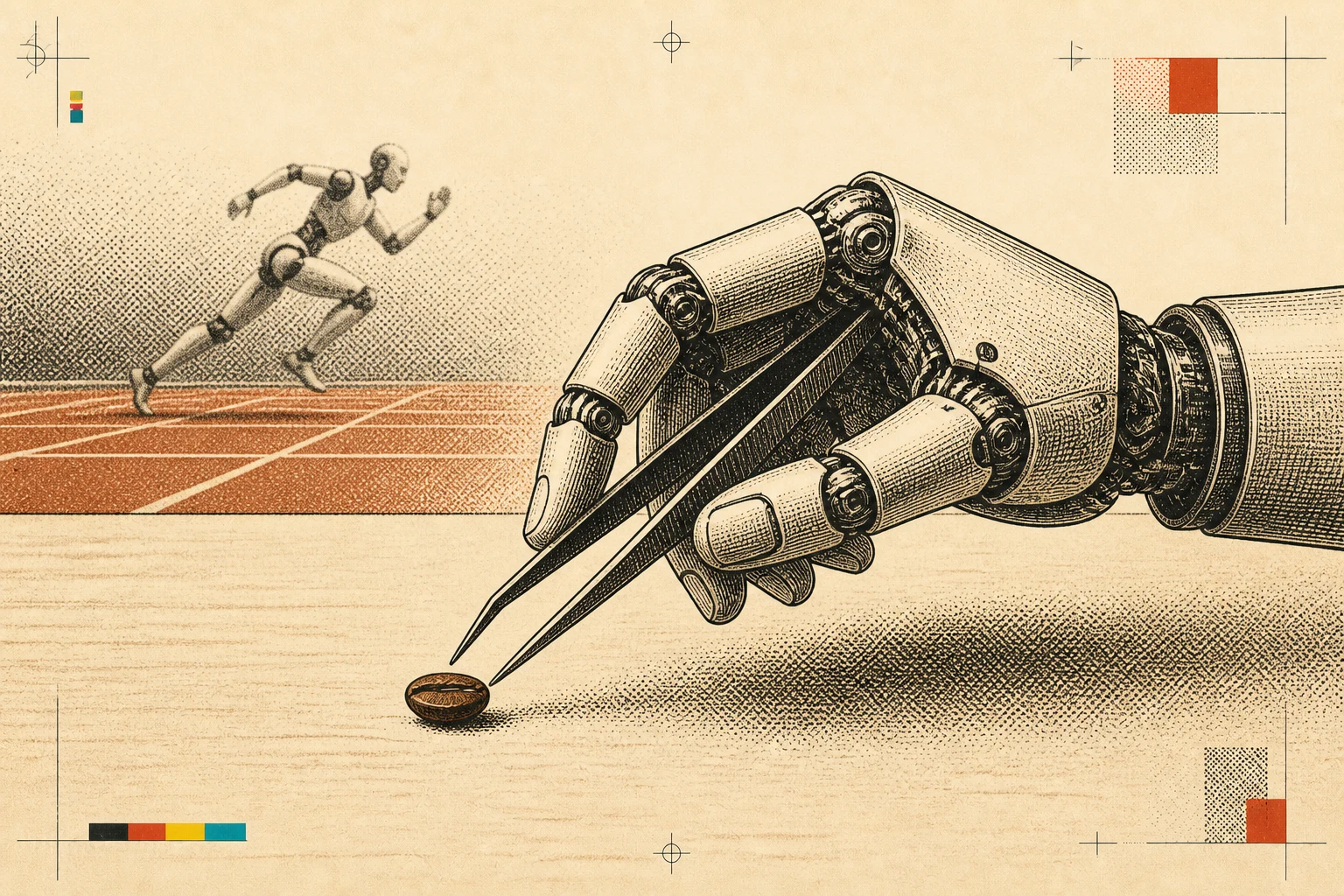
At the World Humanoid Robot Games, a robot runs faster than the human record. A pair of tweezers reveals what AI still lacks in the physical world.
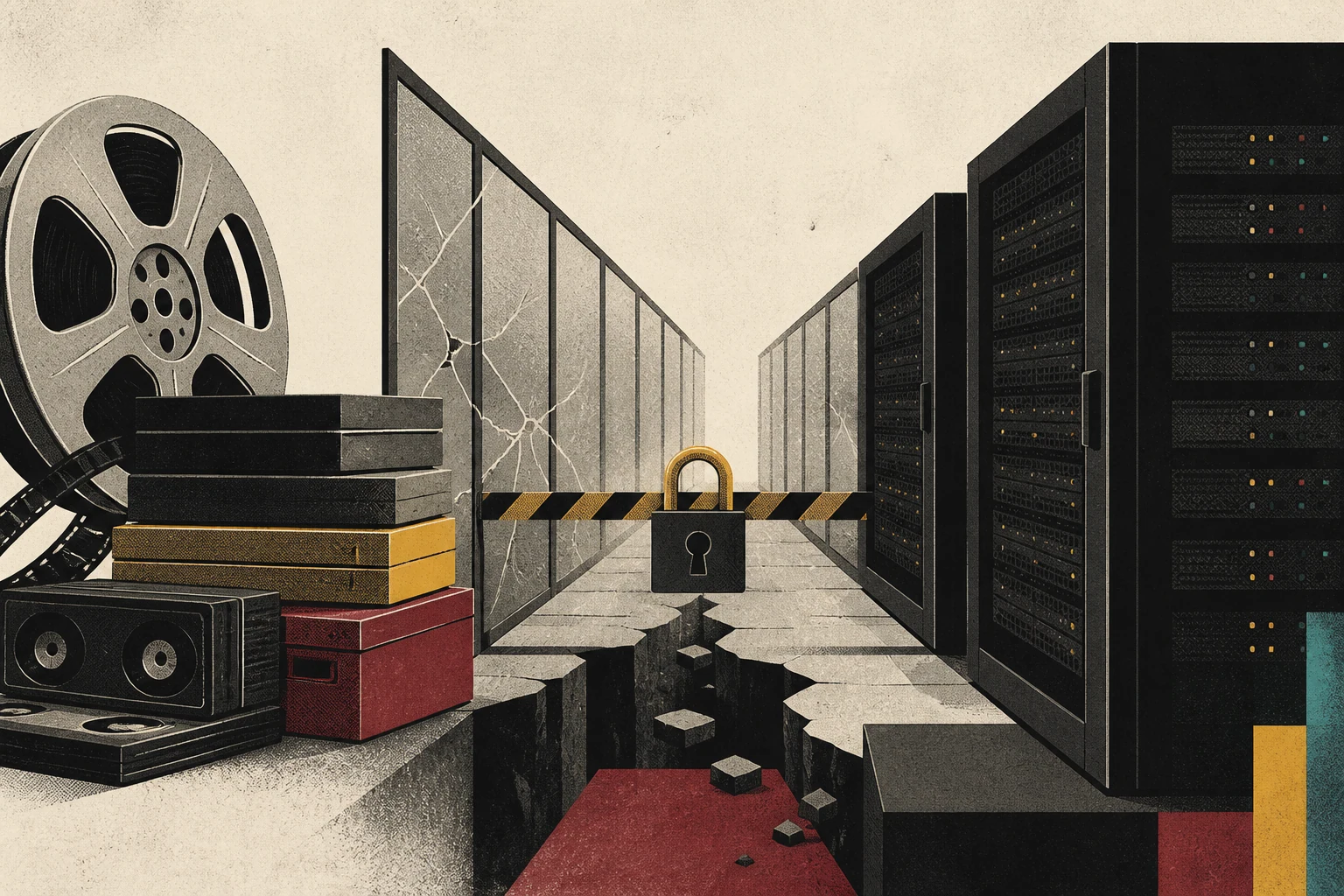
The Nine PBS case shows that owning data does not mean being able to retrieve it: digital memory depends on a chain of services, contracts, hardware and formats that must remain verifiable.
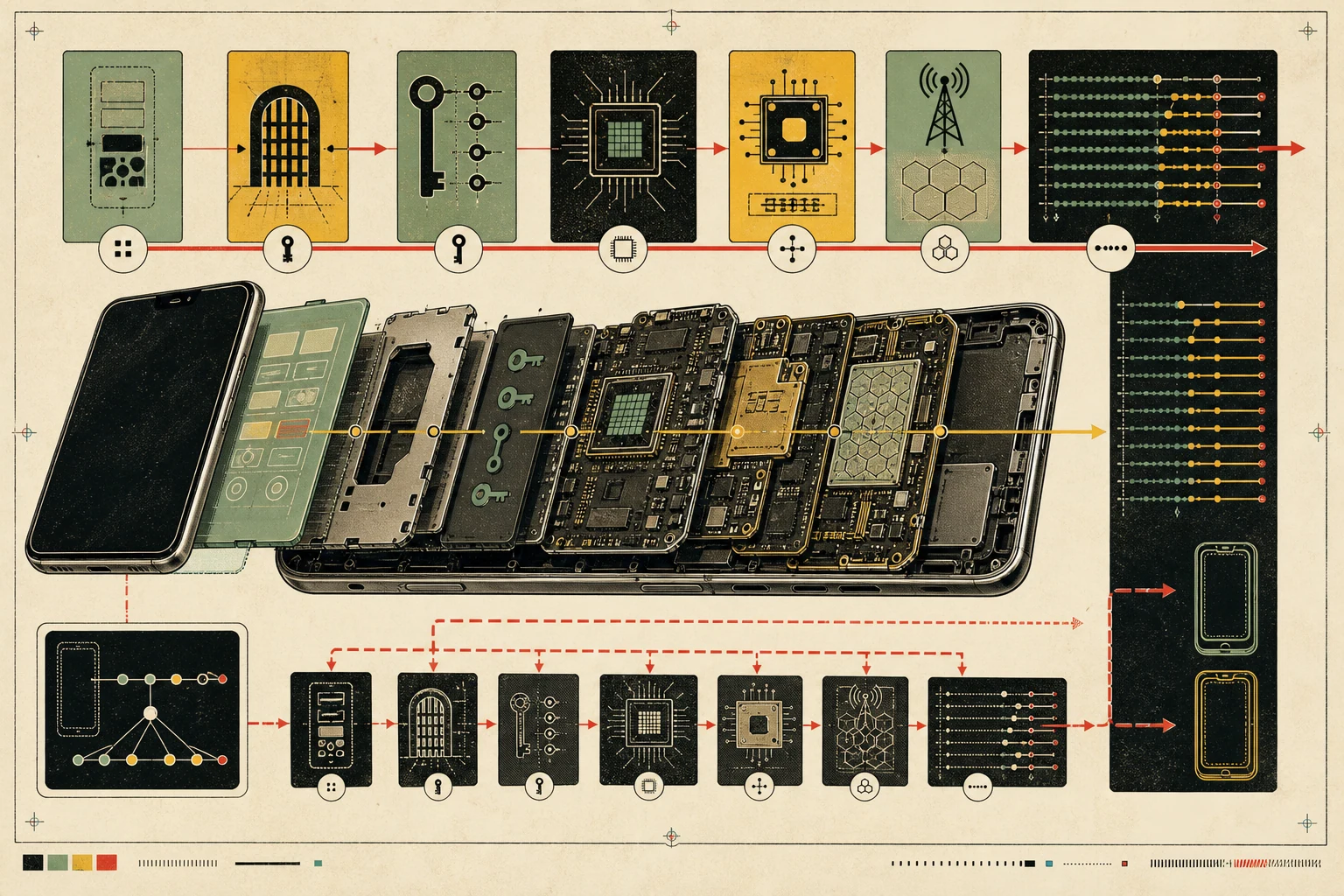
The GrapheneOS and Motorola partnership shows that mobile privacy does not depend on the operating system alone: it begins with hardware, firmware, patches and freedom of installation.
From Dobby's cinematic grave to the fibre-optic cables on the ocean floor: who really owns the physical passages of the Internet?
When owning an object no longer means being allowed to fix it. The FTC takes John Deere to court, Canada legalizes jailbreaking, Europe prepares new rules: a chronicle of a global war for the right to repair.
OpenClaw, the open source AI agent with 234,000 GitHub stars, has exposed 512 critical vulnerabilities. The story of the first major security crisis of autonomous AI agents.
Anthropic's Claude Code promises to modernize COBOL, the language behind 95% of ATM transactions. But is it really safe to entrust 220 billion lines of critical code to an AI?
React2Shell and Metro4Shell: two critical vulnerabilities in the React and npm ecosystem that exposed 39% of global cloud environments. Anatomy, actors, and lessons from the web's supply chain.
The Anthropic Pentagon clash over AI ethics: a $200M contract lost, a supply chain risk label, and the battle over autonomous weapons and mass surveillance.
When those who write the laws don't understand what they're regulating
How a Silicon Valley Company Became the Digital Brain of the West
In mid-September 2025, something unprecedented happened in the world of cybersecurity. For the first time in documented history, a large-scale cyber espionage operation was executed almost entirely by an artificial intelligence system, with human intervention reduced to a minimum. Not an assistant, not a copilot: the AI was the pilot. Anthropic, the company that develops Claude, released a detailed report on this operation, attributed with "high confidence" to a Chinese state-sponsored group designated GTG-1002. It's a watershed moment in the history of information security, and it deserves to be thoroughly understood in all its facets.
Analysis of the Cloudflare and AWS Outages That Stopped the Internet
A Journey into the Invisible Foundations of the Digital World
In this article, we trace the fascinating and sometimes tumultuous history of computer viruses – from the first benign "worms" at Xerox PARC to destructive malware like ILOVEYOU, MyDoom, Stuxnet, Conficker, WannaCry, and many others – weaving together technical evolution with social context, underground hacker culture, and shifts in cybersecurity paradigms.
Blog post description.
Comparative Analysis for Enterprise Deployment
In every server room around the world, a question lingers in the air-conditioned atmosphere: Virtual Machine or Container? It's like choosing between a solid SUV and an agile sports car, both will get you to your destination, but in profoundly different ways. The dilemma doesn't admit universal answers, but offers well-defined scenarios that guide this strategic choice. In large modern organizations, these technologies often peacefully co-exist, like different neighborhoods in an evolving metropolis, each with its own character and function. Let's explore when it's best to opt for one or the other solution.
A friendly introduction to networking for the curious and passionate
A Journey Through the Evolutionary Paths of Computing: In the landscape of enterprise computing, technologies emerge, evolve, and transform at a pace that challenges even our imagination. Two paradigms have radically redefined how we design, deploy, and manage applications: virtualization and containerization. Where servers were once monoliths dedicated to single applications, today we speak of elastic, intelligent infrastructures capable of adapting with the agility of a living organism. This evolution goes beyond mere technical progress, it represents a profound cultural shift in how we conceive digital computing.
In recent years, the fields of Artificial Intelligence (AI) and programming have experienced rapid evolution, with advances that until recently seemed like science fiction. We've moved from specialized AI systems to generative and multimodal models capable of performing complex tasks, including software development and the creation of all types of content. In parallel, "AI-first" code editor tools (such as Cursor) and AI-based low-code/no-code platforms (such as lovable.dev) are lowering the barrier to adopting digital technologies, allowing a wider audience to develop applications or integrate AI into workflows.
In the software development landscape, low-code/no-code frameworks and platforms constitute a rapidly growing trend, driven by the need to accelerate release cycles and reduce barriers to entry for application development.
Notion has revolutionized how companies, teams, and professionals organize their work and manage information. In this in-depth analysis, we'll explore concrete case studies demonstrating how Notion has transformed business processes, enhanced collaboration, and boosted productivity across various sectors, supported by quantitative data and verifiable sources.
In today's technological landscape, few tools have redefined the concept of a digital workspace like Notion has. Launched in 2016, this software marked a significant turning point in graphical interface development and digital information management, addressing needs long felt by professionals and businesses alike.
In this article, we will explore the Second Brain methodology developed by Tiago Forte, analyze why Obsidian represents an ideal tool for building it, and examine concrete examples of how this approach can revolutionize the way we learn, create, and work.
In today's technological landscape, cybersecurity and digital resilience go hand in hand. Below we explore the most recent innovations, strategies adopted by industry leaders, the evolution of threats, and best practices for protecting corporate data, along with emerging technologies shaping security.
As artificial intelligence (AI) becomes ever more prevalent—from social media feeds curated by algorithms to self‑driving cars—significant ethical issues arise. One major concern is algorithmic bias: because AI systems…
The advent of social media has profoundly transformed the way we communicate and interact. Today, we can instantly share moments of our lives with friends and strangers across the globe. This has fostered a culture of…
Technology permeates every aspect of our daily lives—from the smartphone we constantly carry to social networks where we share our thoughts—and raises important ethical questions. One of the most pressing issues is…
Transhumanism is both a movement and a school of thought that explores the idea of using technology to transcend human biological limits. At its core is the belief that humanity is in a transitional phase and can…
Blockchain literally means “chain of blocks.” It is a technology that maintains a secure and transparent public, distributed ledger of transactions. Imagine a ledger maintained by many participants: every time a…
Post‑quantum cryptography (PQC) refers to encryption algorithms designed to withstand attacks even from future quantum computers. Today’s online security relies on algorithms—such as RSA or ECC—that a sufficiently…
When people hear “blockchain,” they often immediately think of Bitcoin and cryptocurrencies. However, this technology—essentially a distributed and immutable digital ledger—has found applications in many sectors beyond…
The imminent arrival of large‑scale quantum computers represents an unprecedented threat to cybersecurity. Leveraging the principles of quantum mechanics, these machines will be capable of solving certain mathematical…
The concept of Zero Trust is revolutionizing cybersecurity. In simple terms, it means that no user or device is automatically trusted—even if they are part of the corporate network. Every time someone attempts to…
Descrizione del post del blog.
In today’s threat landscape, companies are adopting radically new approaches to security. Zero Trust Architecture has become a buzzword—a security model in which no user or device, whether inside or outside the…
S D‑WAN and Cloud Networking: Flexible Connectivity for the Enterprise
The Ubiquiti UniFi ecosystem is expanding with a new generation of devices designed to leverage the latest networking technologies. Foremost among these is the UniFi E7 Access Point, Ubiquiti’s first Wi‑Fi 7 AP aimed…
Wi‑Fi 7 (IEEE 802.11be) promises to revolutionize wireless networks by delivering unprecedented speeds and reliability. Theoretically, it can reach speeds up to 30 Gbps—roughly three times faster than Wi‑Fi 6—thanks to…
Next-generation networks are evolving thanks to technologies such as Software-Defined Networking (SDN) and Network Functions Virtualization (NFV). Instead of relying on rigid devices with manual configurations, SDN…
Artificial intelligence is becoming a key ally in cybersecurity, capable of detecting attacks and anomalies that might otherwise go unnoticed. An AI‑powered threat detection system can analyze vast quantities of log…
In this article, we'll delve into the strengths of UniFi and Ubiquiti – from ease of use to centralized management, from scalability to competitive pricing and integration with other systems – also highlighting the innovative Etherlighting feature