Somewhere inside a Denver data center are images of the great flood that submerged parts of the American Midwest in 1993. There are programs about the history of East St. Louis, recordings from the pandemic, interviews, local reports and material produced by a broadcaster that has been on the air since 1954.
The files do not appear to have been deleted. No fire destroyed the servers. No ransomware note appeared on a screen. The owner of the archive even knows the building in which more than 50 terabytes of its memory should be stored.
And yet it cannot simply walk in and take them.
Nine PBS, the public television station in St. Louis, lost access to its data when Open Source Storage, the company under contract to provide the service, stopped responding and fell out of good standing as a business. The provider's hardware was housed at Iron Mountain. Iron Mountain held the physical infrastructure, but had no direct relationship with Nine PBS and, according to its statements, did not administer the data stored on its customer's servers.
A lawsuit followed. A judge recognized Nine PBS as the owner of the material and established a path for recovering it. A third-party technician will be needed, perhaps a former employee of the vanished provider. Someone will have to determine exactly where the files are, how they are organized, whether they are encrypted and whether they share storage with other customers' data. Nine PBS will also have to cover the hosting fees that Open Source Storage stopped paying.
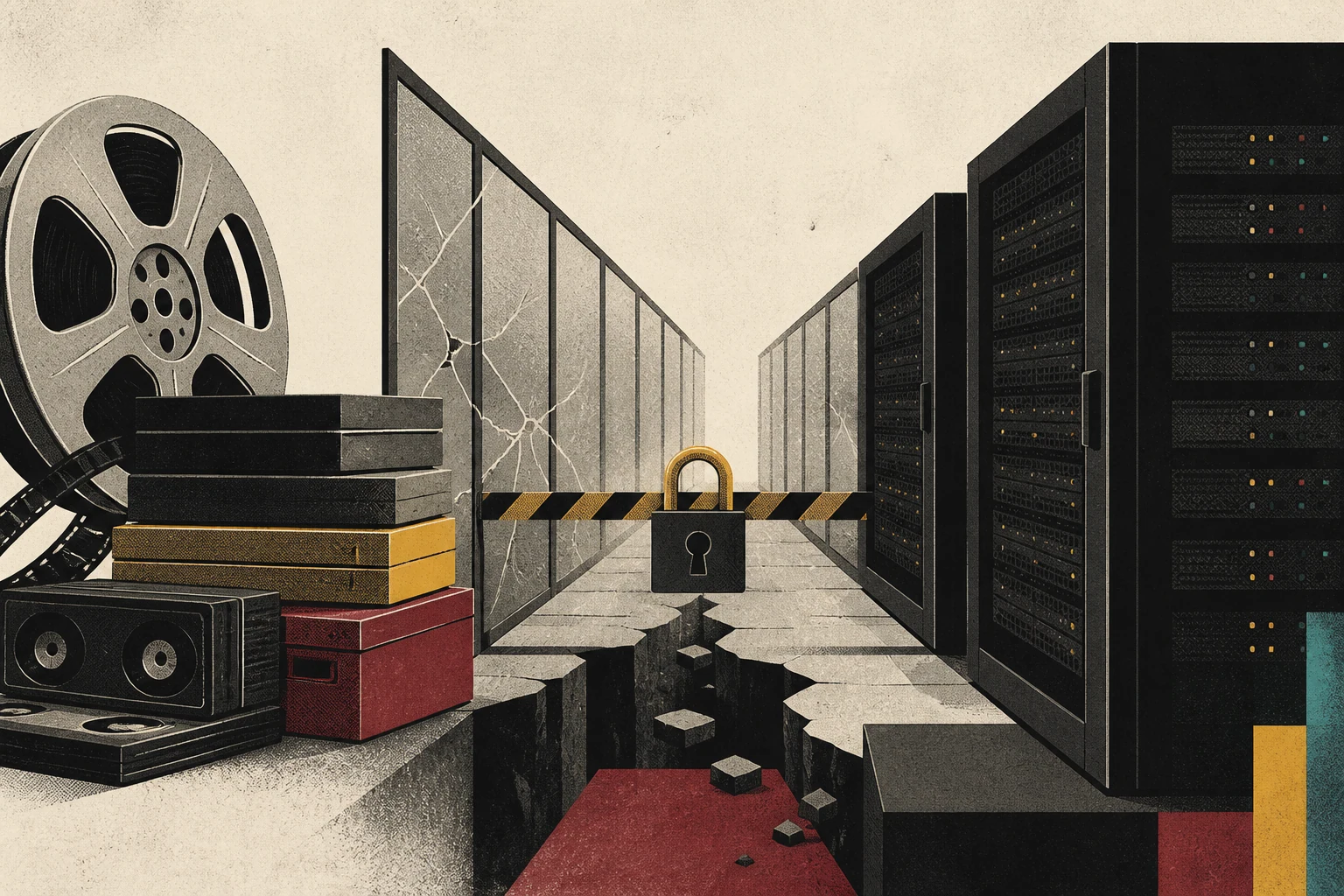
The scene contains a perfect paradox of digital life: you can legally own seventy years of history and no longer have an immediate way to open it.
The public record does not make clear whether Nine PBS has other complete or partial copies. That gap does not prove the Open Source Storage system held the only copy. It does show, however, that this repository mattered enough to require two lawsuits and a court-defined recovery process.
This is not merely a story about backups. It is a story about how many different things we hide inside the phrase "my data."
Memory's Expiration Date
The relationship reconstructed in the court filings began in 2019. Nine PBS hired a company described as Open Source Storage's predecessor to provide hardware, software and cloud storage services. The contract was renewed annually.
At the beginning of 2026, the station tried to arrange a meeting to discuss another renewal. No one replied. The agreement was due to expire on March 6 and included a clause that looked reassuring: after the service ended, Nine PBS would have thirty days to retrieve its data.
According to the complaint, access was cut off without warning on March 6.
The clause remained in the contract. The technical ability that was supposed to make it real disappeared with the people who ran the service.
Nine PBS looked for Open Source Storage and found that its website was gone. Colorado records listed the company as delinquent. A lawsuit in St. Louis followed, then contact with a man who claimed to have acquired the company's assets, weeks of communications and another disappearance. He later said he had been defrauded during the acquisition. The former owners formally regained control, but the station still could not retrieve its material.
A St. Louis court eventually entered a default judgment: the data belonged to Nine PBS, which had the right to immediate possession. Open Source Storage had to return it or help transfer it to a new provider.
The problem is that a judgment against a company that no longer answers does not generate a password. It does not recreate an inventory. It does not reveal which server to mount, which volume to unlock or which key to use.
The station therefore turned to Iron Mountain, owner of the data center containing the infrastructure. From the outside, the request looks simple: those are our data, the servers are in your building, give them back.
From inside the arrangement, the situation is harder. Iron Mountain's customer is Open Source Storage. The hardware belongs to that customer and may contain information from several organizations. Handing it to a third party without a court order could breach contracts and confidentiality, exposing data that Nine PBS has no right to see.
St. Louis's memory is physically close and legally distant.
The Cloud Always Has an Address
The cloud is often described as merely "someone else's computer." The joke is useful when we need to remember that blue icons still depend on disks, cables and data centers. It stops being enough as soon as we ask who, exactly, that someone else is.
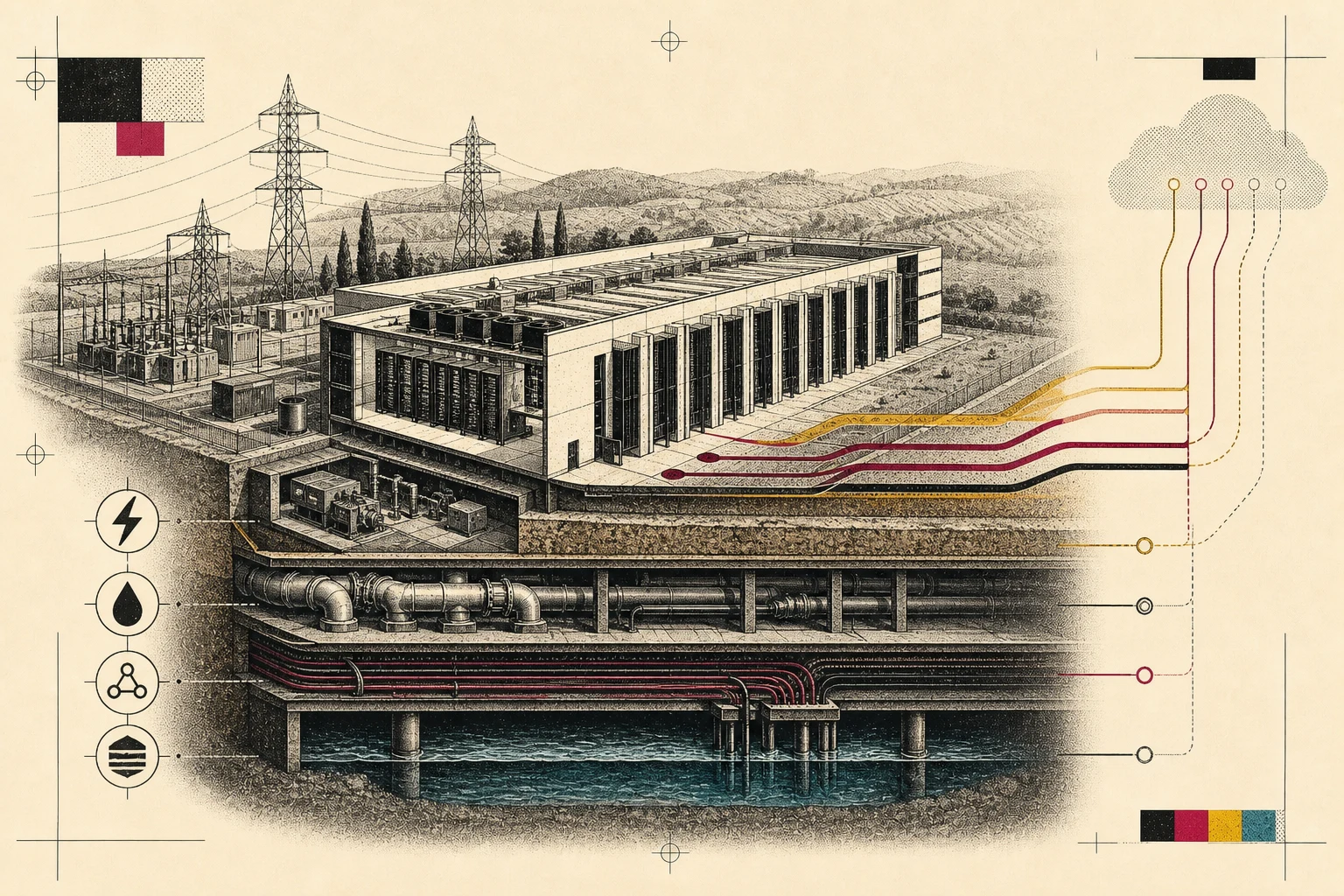
Under the model reconstructed by the lawsuit, Nine PBS did not rent space directly from Iron Mountain. It purchased a service from Open Source Storage. That provider combined hardware, software, credentials, administration and storage capacity. Open Source Storage, in turn, relied on Iron Mountain for the building, power, cooling, connectivity and physical protection.
One service therefore brought together a commercial relationship, a physical arrangement and an operational capability. Nine PBS paid Open Source Storage; Open Source Storage placed its machines with Iron Mountain; only the administrators of those machines knew the credentials, volumes, keys and boundaries between customers. While the service worked, those relationships looked like a single object. When the provider disappeared, they opened into separate floors of a building.
The judge had to distinguish four conditions that the phrase "my data" usually compresses into one. Ownership says who the content belongs to: Nine PBS. Possession concerns who materially controls the medium: the provider's hardware inside the data center. Custody creates a duty to protect something without automatically granting a right to use it: the role attributed to Iron Mountain. Access, finally, is the technical and legal ability to read and transfer the files. You can hold the first and lose the fourth.
Owning the building does not make Iron Mountain the administrator of the servers. Owning the programs does not make Nine PBS the owner of the disks. The party under contract with the data center is not necessarily the party to whom the content belongs. The court process has to reassemble those roles without exposing other customers' data stored on the same machines.
The National Institute of Standards and Technology defines cloud computing as convenient, on-demand network access to a shared pool of configurable resources. The important word here is service. Nine PBS did not simply buy fifty terabytes of matter. It bought the continuity of a system able to receive and preserve data, authenticate the station and return those data to it.
When that system disappears, the media can remain powered on while the cloud suddenly becomes very heavy: a cage, some servers, unpaid invoices and people unsure who can authorize opening it. This is not bureaucracy laid on top of technology. It is the real technology, made of permissions, expertise and relationships between organizations as well as machines.
An Archive Is Not a Very Large Disk
Three questions are enough to see why fifty terabytes can contain seventy years of history without, by themselves, constituting a safe archive. Where are the bits? Which copy can we restart from after an incident? How will we know, twenty years from now, that the content is authentic and still usable? Storage, backup and preservation answer those questions respectively. A disk may take part in all three activities, but it is not identical to any of them.
Preservation adds at least three properties to storage, all of which became decisive in the Nine PBS case. Integrity makes it possible to verify that the recovered files are the deposited files, rather than a plausible but incomplete directory. Usability preserves the codecs, software and metadata needed to interpret them. Portability allows the archive and its descriptions to move to another system at sustainable cost and speed. These are not additional forms of ownership. They are the conditions that turn a right into something that can still be exercised.
The National Digital Stewardship Alliance organizes preservation work around storage, integrity, control, metadata and content understanding. For collections intended for long-term preservation, the Library of Congress keeps at least four copies across at least two independent systems and geographically separate locations, with one copy available for active use and monitoring.
That is not a recipe every broadcaster must reproduce exactly. It is a way of measuring independence in terms of failure. Three replicas produced by the same process can carry the same corruption. Two media managed through the same console can vanish with the same account. An encrypted off-site copy whose only key lives on the primary system can survive a fire and die with a password.
The 3-2-1 formula remains a useful heuristic: three copies, two kinds of media, one copy elsewhere. But it becomes an empty promise if no one checks the inventory, calculates and verifies checksums or performs a full restore. The last date on which all the media and their metadata came back together tells us more than the number of copies listed in a contract.
The judge ordered the recovered files to be compared with the list attached to the complaint. That is the forensic form of an ordinary principle: before declaring an archive safe, you must know what you expected to find and verify that it actually returned. An untested copy remains a hope with a monthly bill.
The Surviving File That Can No Longer Speak
Suppose the appointed technician enters the Iron Mountain cage and finds the servers still running. That would be good news, not the end of the work.
The first question is where the data are. They may live on directly attached disks, in a cluster, on distributed volumes or on tape. The second is how they are identified. Nine PBS files might sit in separate directories, exist as objects described by a database or belong to a system that assigns identifiers no one can understand without its application.
Then there is encryption. If the media are encrypted, someone must determine where the keys are and who controls them. Encryption is essential protection while it prevents an outsider from reading the data. It becomes a perfect lock when the only party able to open it disappears.
Even after the bits can be read, formats remain a problem. A video is not merely a file with a recognizable extension. It contains streams compressed with codecs, metadata, timecode, audio tracks, captions and relationships with other objects. An editing project may refer to dozens of external files. An editorial database may contain the description that makes it possible to find a person, a place or a date within thousands of hours of footage.
The Library of Congress distinguishes bit-level preservation from long-term usability. Keeping the original stream intact is fundamental, but it does not guarantee that the content can be played. A format may become obsolete. Required software may depend on licenses no longer available. The necessary hardware may disappear.
That is why an archive also includes technical and descriptive metadata: what the file is, where it came from, when it was created, how it was changed, which software can interpret it, which rights govern it and which integrity checks have been performed.
In an analog archive, a box without a label remains mysterious, but a person can open it and look inside. In a digital archive, the label may be the condition for knowing where one program ends and another begins.
Exit Cannot Be Just a Clause
Nine PBS's contract allowed thirty days to recover the data after the service ended. On paper, it was an exit route. In practice, it depended on the very provider that would have to keep that route open.
As early as 2015, guidance from the United Kingdom's National Archives on using cloud storage for digital preservation urged institutions to ask extremely concrete questions. What happens if the provider fails? How much notice will we receive? How quickly can we transfer the data, and in what format? Can we synchronize them to a local system or a second service? Can the exit procedure be tested? Is there an escrow agreement for critical software, keys or documentation?
The force of those questions lies in the verb can. Not "the contract says we will be able to," but "we have verified that we can today."
An exit strategy for an archive is not the final paragraph of a contract. It is a system function. It requires documented exports, known throughput limits, predictable costs, portable formats, available keys and assigned responsibilities. It must account for the amount of data and the time needed to verify them after transfer.
Fifty terabytes can be copied relatively quickly on modern infrastructure, but a network's nominal speed does not describe the entire job. Every object must be read, transferred without error and checked; metadata must be preserved or rebuilt; problematic files must be handled; and an independent copy must exist before the old system is shut down.
Portability also has a price. Some services charge for data leaving the platform. Others use formats or interfaces that bind the customer to the system. The necessary expertise may belong to the provider. When migration is designed only on the day the relationship ends, the customer is negotiating at the moment of least power.
The most honest test of an exit strategy is to carry out a small exit when no exit is necessary.
In Europe, Exit Has Become a Right
The case is American, but for a European reader the issue is no longer merely sound contract practice. The EU Data Act has applied since September 12, 2025. Its chapter on switching between data-processing services, including cloud and edge services, starts from the recognition that exit charges, slow procedures, closed formats and poor interoperability can turn a service into a dependency.
The regulation requires the original provider to remove commercial, technical, contractual and organizational obstacles that prevent a customer from moving to another provider, returning data and digital assets to its own infrastructure, or using several services together. The customer's rights and the provider's obligations must be written into the contract, but they are no longer limited to whatever formula the vendor chooses.
The surprising number is thirty. Nine PBS's contract allowed thirty days to recover the archive; the Data Act uses thirty days as the ordinary transition period. Europe does not, therefore, solve the problem by offering a more generous deadline. It changes who must make that deadline workable.
Had this framework governed the relationship, Nine PBS would not have reached March 6 with a clock already running and a silent provider. It could have initiated the switch with up to two months' notice, while Open Source Storage would have been required to maintain continuity and assist the transfer. At the end of the transition, the archive would have remained retrievable for at least another thirty days. Even a technical inability to meet the standard period would not have justified silence: the provider would still have had to explain the problem and build an alternative path.
The deadline thus stops being a countdown abandoned to the customer. It becomes a verifiable part of the service. Software and platform services must support open interfaces and exports in common, machine-readable formats at a minimum. Nine PBS's clause was not absurd because it lasted thirty days. It was fragile because no one had made those thirty days independent of the same company that could disappear.
The price of leaving is also set to change. Until January 12, 2027, providers may apply only reduced charges, limited to costs directly linked to the switching process. From that date, the Data Act prohibits switching charges, including data egress fees.
This is a significant political shift: portability is no longer treated as a vendor courtesy but as a minimum condition for a contestable market. If Nine PBS were a European organization and the service fell within Chapter VI, a thirty-day clause without an effective process would no longer end the analysis.
The case nevertheless exposes a limit that cannot be ignored. The Data Act governs what a provider must do. It therefore assumes a provider that can still be reached, staff able to carry out the transfer and a system with some administrative path still intact. This is an inference from how the law works, not an explicit exception in its text: no switching right can materialize a missing key, rebuild an inventory that never existed or make a dissolved company answer the phone.
European law improves the moment when a relationship ends normally. Preservation architecture must continue to work when the relationship does not end normally at all.
The Duty Not to Oversimplify Iron Mountain
It is easy to assign fairy-tale roles in this story: a broadcaster protects public memory, a large data center keeps the door shut, and a judge returns what is rightfully owned. Reality is less convenient.
Iron Mountain said it had no access to the data. Its customer had rented space for its own servers and hardware. Allowing Nine PBS to operate those machines without an order could have exposed other Open Source Storage customers' information. The same problem applies to the recovery technician, who will have to show that only the station's material was copied; Nine PBS will also have to indemnify Iron Mountain against damage to other data.
That is not a technicality invented to hold the archive hostage. Separation between customers is one of the fundamental promises of shared infrastructure. A data center that handed over hardware to the first party able to point to recognizable files would be a far less secure place.
Judge Eric Elliff tried to build a bridge between incompatible rights: Nine PBS must be allowed to recover what it owns; Iron Mountain must not violate duties to its customer and other parties; the physical media must be returned; overdue fees must be paid; and if encryption or architecture makes recovery harder, another hearing will follow.
The court is manually doing what the system should have anticipated: authenticate the request, limit privileges, log access, separate tenants and verify the result.
That is not an argument against the cloud. It is an argument against confusing the reliability of a data center with the continuity of the entire service chain.
Local Memory Has No Second Original
Nine PBS described the material as part of more than seventy years of its history. It is also the history of a region. Footage of the 1993 flood is not merely television content: it shows which streets went underwater, how people spoke, which neighborhoods received attention and which problems a community considered urgent.
Local archives hold what national narratives leave at the margins. They preserve faces that will never enter the best-known documentaries, forgotten administrations, urban change, vanished occupations, accents, advertisements, failed predictions and everyday ways of describing the world.
Some of this material may have come from film or tape that still exists. Some may have been born digital, with no analog equivalent. UNESCO has emphasized this fragility for more than two decades: digital heritage requires intentional action throughout its life cycle because hardware, software, responsibilities and resources change faster than traditional physical objects.
A manuscript forgotten in a cupboard can survive decades of neglect. In the same span, a digital archive left untouched can lose readable media, software, keys, metadata and the people able to interpret it. It does not rot dramatically. It becomes progressively unintelligible.
Local institutions are particularly exposed. Their missions are long and their budgets limited. They must preserve material far beyond the life cycle of the companies entrusted with the technology. A one-year contract can contain objects intended to survive for a century.
Here lies the cloud's true temporal imbalance: the service is purchased month by month, while memory must remain traversable across generations.
Ownership Means Being Able to Rebuild the Route
As of August 24, 2026, the Nine PBS archive has not been declared safe. The judge allowed thirty days to identify someone able to assist with recovery and asked the parties to report back by September 14. The files may be copied without difficulty. Encryption, dependencies or shared data may make the work more complicated.
We do not need to wait for the outcome to understand the lesson. If recovery succeeds, it will not prove the architecture was adequate. It will show that courts, technicians and custodians managed to reconstruct a path after the ordinary one broke. If recovery fails, the loss will not have been caused by a single failed disk but by the alignment of dependencies that could not be replaced.
For a broadcaster, city government, museum, professional studio or research center, ownership becomes concrete when management can put four pieces of evidence on the table: a recent export produced without extraordinary assistance from the provider; an independent copy administered with separate credentials and keys; a report from a successful full restore; and an inventory specifying who can open what if the usual administrator is unavailable.
This is not a technical checklist to delegate and forget. It is the point at which responsibility becomes visible again. Someone must have the task, budget and authority to keep that evidence current. The Data Act provides more leverage while the provider is alive and the relationship must be unwound; independent copies, metadata and keys are what matter when the provider is gone.
In the Denver data center, St. Louis's history had not become immaterial. It remained bits on media inside machines, machines inside a cage, a cage inside a building, and a building inside a network of contracts. What dissolved was the authorized route between the broadcaster and those bits.
The cloud neither forgets nor remembers. It preserves what a system of people, copies, rules and checks continues to make accessible. That is why the question for the next meeting is not "have we paid for storage?" but "when did we last prove that we could leave and restart without the company selling it to us?"
Saying "these data are mine" remains a declaration of right. Memory begins when that declaration can still be executed in the custodian's absence.
Bibliography and Documentation
Primary and Institutional Sources
- European Parliament and Council of the European Union. "Regulation (EU) 2023/2854 of 13 December 2023 on Harmonised Rules on Fair Access to and Use of Data (Data Act)." In particular Chapter VI and Articles 23, 25, 29 and 50.
- European Commission. "Data Act Explained." Section on switching between data-processing services, accessed August 24, 2026.
- National Digital Stewardship Alliance. "Levels of Digital Preservation, Version 2.1." March 2026. Matrix and tools for assessing storage, integrity, control, metadata and content.
- Library of Congress. "Use of Approved Inventory Systems." Digital Collections Management Compendium, accessed August 24, 2026. Independent copies, geographic separation and integrity monitoring.
- Library of Congress. "Bit Level Preservation and Long Term Usability." Digital Collections Management Compendium, accessed August 24, 2026. The distinction between bit survival and future usability.
- The National Archives. "Guidance on Cloud Storage and Digital Preservation." Second edition, March 2015. Portability, provider failure, escrow and testing exit procedures.
- UNESCO. "Charter on the Preservation of Digital Heritage." October 15, 2003. Born-digital heritage, continuity and preservation responsibilities.
- Peter Mell and Tim Grance. "The NIST Definition of Cloud Computing." NIST Special Publication 800-145, September 2011. Definition of the cloud model and shared resources.
Technical Documentation and Research
- Library of Congress. "PREMIS: Preservation Metadata Maintenance Activity." Documentation for the preservation metadata standard, accessed August 24, 2026.
- Digital Preservation Coalition. "Digital Preservation Handbook" and its glossary entry on bit preservation. Accessed August 24, 2026. Differences between copies, integrity and long-term preservation.
Analysis and Editorial Coverage
- Francisco Rodriguez. "Nine PBS Sues Iron Mountain over Blocked Access to Archival Data." Current, August 11, 2026. The contract, lawsuit and parties' positions.
- Francisco Rodriguez. "Judge Sets Framework for Nine PBS to Retrieve Archival Data." Current, August 13, 2026. The court order, recovery process and protection of other customers' data.
- Ryan Whitwam. "PBS Station Fears Losing 50TB of Data after Being Ghosted by Cloud Storage Provider." Ars Technica, August 14, 2026. Technical analysis of the case and size of the archive.